Interview with author of new book about sex services for women in Japan
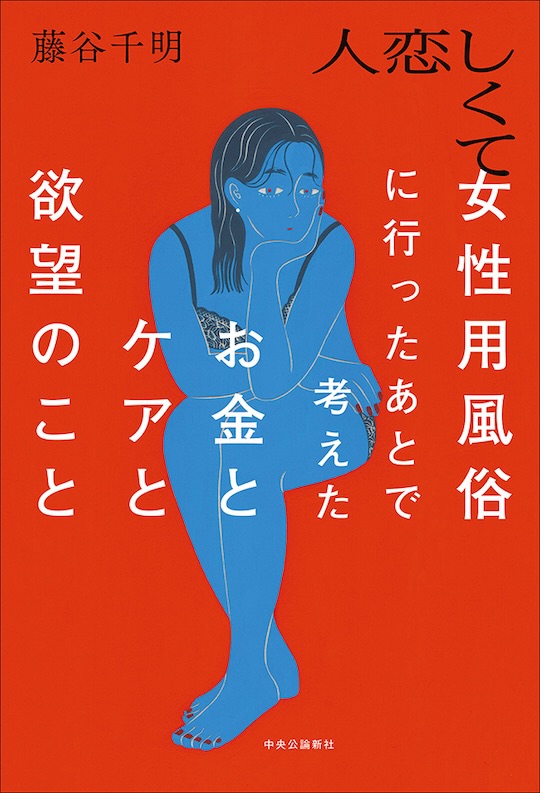
The number of sex services and brothels for women in Japan is gradually on the rise. The number currently registered on the sex industry information site Kaikan is said to be around 400 nationwide. A new book, Thoughts on Money, Care, and Desire After Using a Sex Service for Women Because I Was Lonely, written by Chiaki Fujitani and published by Chuokoron Shinsha in March, discusses this rapidly developing industry.
Shueisha Online recently interviewed the author about the trend. The following is an edited translation of the article.
In recent years, female-oriented sex establishments (known in the industry as jo-fu) have increasingly appeared in fiction such as manga and TV dramas.
The image of the women who use such services varies: they are in a sexless marriage, they are self-conscious about their lack of sexual experience, they want to relieve their stress at work.
Fujitani (pictured) is frank about why she visited a brothel for women: “Because dating apps didn’t work out for me.”
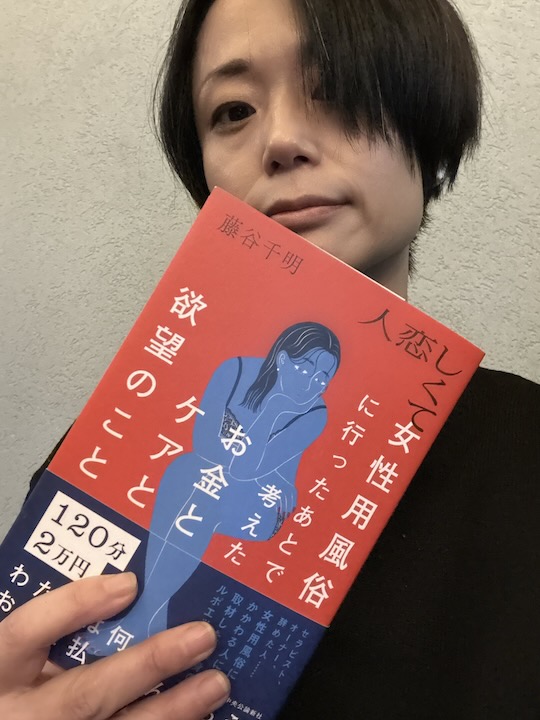
“After my divorce, I thought, ‘Let’s do things I couldn’t do if I was married,’ and registered on Tinder. But I kept getting messages from people who didn’t seem single, and it seemed like I couldn’t build the kind of relationship I wanted. I wanted to have some fun without any strings attached, so I thought, ‘Well, why not pay for professional services?’ I was vaguely aware of the existence of sex services for women through manga and other media.”
She searched the websites of major female-oriented brothel establishments and chose a “therapist.”
“The photo was blurred, so only the eyes were visible, but I got a good vibe from it. It was kind of like a dating app. The therapists use social media and have photo diaries, so I was able to imagine what kind of person they were and thought the one I chose didn’t seem like he’d do anything I didn’t want to do,’ which was the deciding factor.”
As with regular brothels, penetration is officially prohibited. A basic treatment consists of a massage using oils and sensual massage. There are almost no physical brothels. Instead, the services are outcall (delivery health): therapists visit your hotel or home, so being alone in a private room with a stranger inevitably carries the risk of sexual assault.
And Fujitani’s impression after her first session?
“Professionals are amazing.”
She then found herself requesting the same therapist for a year until he retired from the industry.
“He was good at massages and being sensual, and his personality suited me. At first, I used his services almost every week, which made him a little wary. Then I gradually settled down to about once a month. The basic fee was ¥20,000 for a two-hour session, with a ¥2,000 nomination fee. On weekday afternoons, love hotels are around ¥5,000 to 10,000, so the total per session was about ¥30,000. I only used the overnight course once, which cost about ¥100,000 in total. I also treated him to meals and gave him Christmas presents, so I think I spent around ¥1 million.”
Aspects of this, especially the latter treats and gifts, sound similar to the relationship that women can build with a host (and vice versa, men with a hostess) in Japan.
Did Fujitani feel guilty or exploitative about using the service? The discourse in Japan has shifted recently to include customers as the criminal perpetrators in an illegal transaction (currently, the law punishes only the seller, not the buyer). A change in the law is mooted.
“I wondered if what I was doing could really be called an equal transaction. That’s something that’s been bothering me for a long time,” Fujitani says.
But she also notes that the image of sex services for women seems to differ from those for men: there’s an underlying notion that women use such services for reasons not solely about sexual gratification.
“When a woman says she uses a sex worker, she’s often asked about her reasons, as if something must have happened to prompt her to do it. But men who go to sex work aren’t asked that, are they? It’s the same with those who work in the sex industry. The inner lives of women working in the sex industry are often highlighted, but there are few instances where men are asked why they beame a therapist.”
This led her to write her book and conduct numerous interviews with owners for sex services for women as well as popular and former therapists (sex workers).
But Fujitani felt like she was still missing a certain perspective on the subject, because she’s never experienced a sex service for men, and research from a distance only goes so far.
“I didn’t know what else was different, or even if there really was a difference. Seeing it firsthand isn’t the same as knowing, but I felt I couldn’t write about it unless I had a ‘real’ experience of it myself.”
Despite her editor’s objections, Fujitani began working as a sex worker for men. She is in her forties, so she presumably worked at a specialist jukujo establishment or service.
“Male clients, while their sexual desires may take precedence, usually show a certain degree of consideration of the worker. Some even show signs of worrying about my physical well-being. In fact, that can sometimes feel more burdensome. This is purely my personal experience, but I felt they weren’t so different from me as a client. It’s somewhat unsettling, but not 100% bad.”
In the book, a male therapist suggests that male and female customers of sex workers are ultimately not so different. “The biggest reason people go to sex workers is probably loneliness. But it’s difficult for men to admit that.”
And would Fujitani use male sex worker services again?
“I’m not using them right now, but I think I might again. I don’t regret going. However, the pleasant memories and the question of whether this was exploitation have always lingered. It was never one or the other: I felt the comfort and guilt of paying for a service. I wrote this book while grappling with both those feelings.”







1 Comment
So she paid a guy to rub/lick her pussy, then started stroking/sucking dicks for money herself? All so she could write an ‘authentic’ book?
I can’t imagine why her marriage didn’t work out…
Another set of proud Japanese parents I’m sure lmao