Japanese sex industry remains large, call-girl services on the rise
Following the earlier report about discussions underway to review the Prostitution Prevention Law to include the possibility of penalties for those who pay for sex services in Japan, the Asahi Shimbun recently wrote about the sheer scale of the sex industry in Japan.
The market for delivery health services (as call-girl services are euphemistically known) alone is ¥1.4 trillion. The newspaper describes Japan as a “sex industry superpower” whose growth has been fostered by a “Galapagos-like” legal system.
The Prostitution Prevention Law only covers actual full sexual intercourse between men and women. Other sexual services are considered legal, contributing to the development of the uniquely large sex industry.
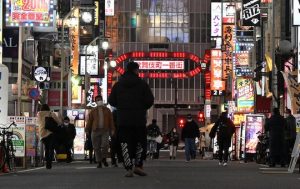
Any visit to a place like Kabukicho in Shinjuku, central Tokyo, will reveal establishments with signs for soaplands (a bath-centered brothel), fashion health (a kind of brothel), delivery health, and men’s esthe (another euphemism for a brothel).
According to a survey on the nighttime economy market published last December by Yano Research Institute, the market size for delivery health services, where women are dispatched to hotels or homes, is estimated to have reached ¥1.4 trillion in fiscal 2024.

The 1956 Prostitution Prevention Law defines prostitution as “engaging in sexual intercourse with an unspecified partner in exchange for or with the promise of receiving payment,” which is prohibited. Past court precedents have limited this interpretation of sexual intercourse to “vaginal intercourse between a man and a woman.” Services that involve using hands or mouths to induce ejaculation, or simulated sexual intercourse, or which do not involve a man and a woman, do not constitute legally prohibited prostitution.
This has created the circumstances for a huge number of services that circumvent the law (at least nominally — they may well offer vaginal intercourse unofficially). Such services fall under the jurisdiction of the Entertainment Business Act and are categorized as “special businesses related to the sex industry.” The act regulates operating hours, locations, and entry for those under 18, but businesses can operate legally just as long as they register with the prefectural government.
According to data on entertainment businesses published annually by the National Police Agency, the number of “storefront” businesses such as soaplands and fashion health clubs has been in long-term decline. On the other hand, businesses such as delivery health services that dispatch women to hotels or homes designated by the customer are increasing, currently reaching about 20,000 — far exceeding the number of storefront businesses.
There’s a simple reason for this: phones. We now all have instant access to websites and messaging services, making it easy to contact a service, select a woman, make special requests, reserve a location and date, and so on. In the past, a lot of that negotiation went on in person at establishments.

Under the Entertainment Business Act, a soapland is classified as a bathhouse with private rooms, with a business model defined as “providing services involving contact with customers of the opposite sex in private rooms within the bathhouse.” However, even if a customer and an employee engage in sexual intercourse in a private room, the premise is that it’s a personal act performed by mutual consent between the employee and the customer based on attraction or romance. Even presupposing that sexual intercourse takes place, the establishment does not officially facilitate prostitution.
Attorney Sho Wakabayashi, an expert on legal issues related to sex work, is quoted by the Asahi as saying, “The police are certainly aware that actual sexual acts occur routinely in soaplands and similar establishments, but prosecutions under the Prostitution Prevention Law are rare, and this has been a state of tacit approval for a long time.”
But the police are cracking down on malicious scouting/recruitment gangs, most notably the campaign against the nationwide network Natural and Access, and this has led to large-scale closures of soaplands.
According to Wakabayashi, the background to this is less a crackdown on soaplands and brothels than the strengthening of regulations following the designation of scouting companies as “anonymous, mobile criminal groups” (tokuryu), and the social problem of unscrupulous hosts who burden women with large debts (because host clubs often have systems allowing customers to pay later) and then force them into prostitution to pay those debts off.








1 Comment
I do very much enjoy the odd gratuitous pic included in these articles