Morishita Group closes all soaplands in nationwide Marin chain
It was a rather sad and pitiful end for such a large enterprise. The Marin chain of soaplands came to end on January 30, announced by just a single message on the app LINE.
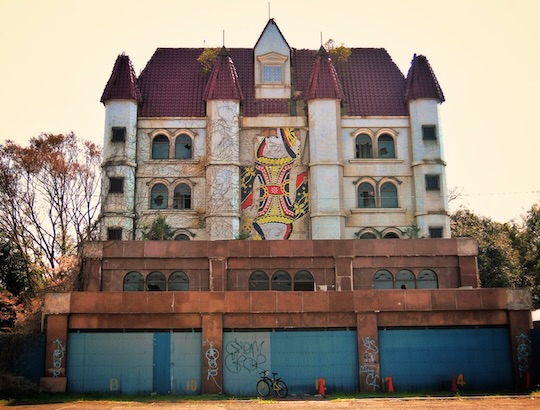
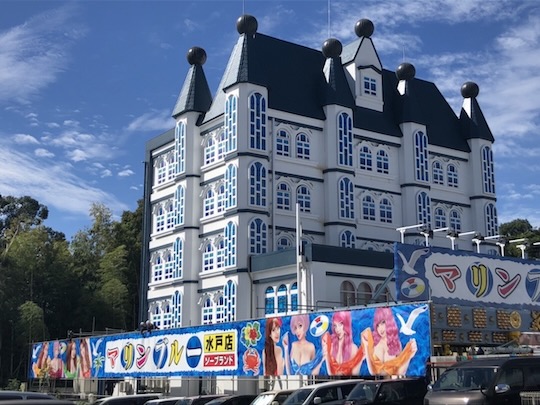
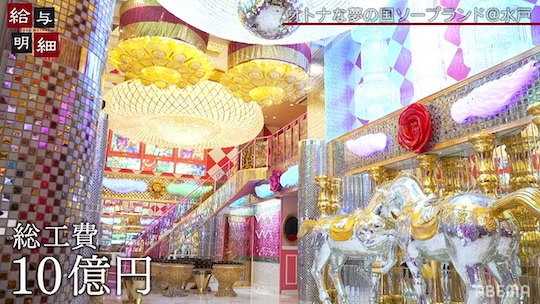
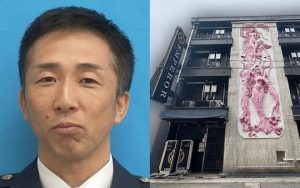
The chain of around 30 soaplands was run by Morishita Group, a giant in the nightlight and adult services sector in Japan with huge interests in Kabukicho, Shinjuku. This included soaplands in Ikebukuro and Kabukicho, such as the foreigner-friendly soapland Barubola. The Marin Palace (also known as Marin Blue or Marin Mito) was probably the best-known location, renowned for its luxurious-looking and kitsch facilities. It was opened in 2022 at a total cost of ¥1 billion, renovating a long-abandoned soapland called Queen Chateau (famous among haikyo enthusiasts) into an opulent style that seemed more in keeping with the bubble era than 2020s.
It went from this . . .
. . . to this . . .
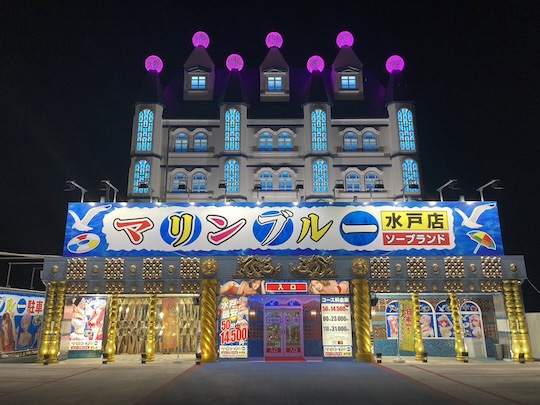
But the emperor has now fled the palace and the lavish site in Mito is possibly set to become a haikyo once more, the refuge of bears and old wild creatures instead of cute ladies and horny clients.
Speculation is rife over why Morishita closed the Marin soaplands so abruptly. Is is something to do with the massive police probe into the scouting organization Natural? Did the group overstretch itself with the construction and renovations for the Marin Mito location?
The closure has reportedly left employees fuming and shocked, according to a detailed report on Coki. The sudden closure of all soaplands in the group meant they could not collect their belongings left at their workplaces, to say nothing of the lost income.
The source of the group’s financial woes is apparently not the Marin soaplands. The operation company, Morishita Group, has a staple that includes the telekura RingRing House, the manga cafe Manbo, the private video booth Kintaro, and the Robot Restaurant, built at a reported cost of ¥10 billion and a firm favorite among foreign tourists (it closed during the pandemic and later transformed into the Samurai Cafe). It also owns properties in Shinjuku and Shibuya, such as the Hakuho Building (Shinjuku Soft). The company boasts sales in the billions of yen. Hakuho Building Co., Ltd., alone has assets of some ¥40 million.
So, what gives?
But police are investigating the funding sources for groups like Natural, and a Morishita affiliate was raided in Ibaraki at the end of January.
The “emperor,” Keiichi Morishita, was arrested in 2006 and indicted for violating the Entertainment and Amusement Act, receiving a suspended sentence. As a condition of his release, he was supposed to withdraw from operating adult businesses in Kabukicho, but this is not the case. Morishita is directly linked to a company behind a site in Kabukicho, for instance.
There is speculation that the police would no longer tolerate the various corporate “defensive walls” that Morishita had built to shield him from direct contact with risk, as the January raid may show. Morishita is no longer just a landlord but an operator, and it could lead to assets being seized.
The closure of the Marin soaplands, then, may have been a small price to pay to ensure the overall Morishita empire stays afloat. As such, the move might actually be a savvy and shrewd business decision in a complicated game of chess with the authorities.








1 Comment
A national tragedy that will shave one percentage point of GDP growth
I wonder if it could be sold to an outside investor