Woman sues man for violating “right to chastity” by lying on dating app
It’s becoming one of prominent issues of our times: people pretending to be someone they’re not on dating apps.
While there are apps and services out there specifically for married couples to find extramarital partners, some less scrupulous (or more calculating) folks like to cast their net wider and also use regular dating apps, even ones that do not require you to make your marital status known.
When does this stop being a white lie and become a more serious form of deception?
As an article in the Yomiuri Shimbun reports, one case indicates that lying about your single status can land you in a lot of trouble in Japan.
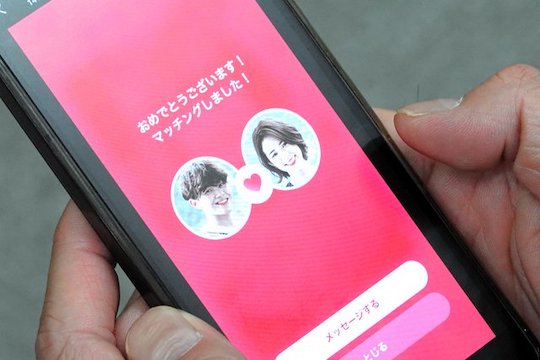
A woman met a met through a dating app, one in which all users are supposed to be single. However, the man actually had a wife and child.
The woman learned this only after the relationship ended, and then launched a lawsuit against the man alleging a violation of her “right to chastity,” which allows her to decide for herself who she will have a sexual relationship with.

In a lawsuit seeking ¥3.34 million in damages and compensation, the Osaka District Court ruled that the man’s false representation as a singleton did indeed violate her right to chastity and ordered him to pay ¥550,000. (These are small amounts, but civil suits in Japan are typically for such nominal fees, plus courts often award lower amounts even when the suit is successful.)
The woman is in her thirties and works at a hair removal salon in Osaka. In March 2019, she joined a dating app that is geared toward only singles only. She soon received a “like” from a younger man, and they began communicating via LINE and phone.
They had dinner together for the first time in May, which was followed by sex at the woman’s home. “We continued communicating for about two months, and I began to develop feelings for him,” she told the Yomiuri Shimbun. The man’s career and the pandemic prevented them from meeting often. Their final meeting was in November 2020, after which the relationship faded out.
That would be the end of the story except for something that happened in September 2022. The woman spotted the image of a kindergarten-age child on a “website about the man’s activities.” That’s the Yomiuri’s description and we don’t really understand what this website refers to, or why the woman was looking at it two years after their relationship had apparently finished.
She demanded an explanation from the man, who apologized for lying to her. She did not accept that, and filed a lawsuit in October 2023.
While the right to chastity is not defined in law, it is considered to be within the realm of self-determination — i.e., the right to freely decide how you lives your life. In some cases, according to the Yomiuri, it may constitute a violation if a person is deceived or threatened by another person into having a sexual relationship.
The terms of the app the two used specifically stipulated that only unmarried people could register, so the man was in breach of that.
In her lawsuit, the woman argued: “The mere fact that he registered on the app clearly shows that he intended to lie from the beginning about being unmarried. If I had known he was married, we would not have had a physical relationship, nor would we have continued our relationship.”
The man tried to counter this by claiming they had not properly dating, but merely had a sexual relationship (like “sex friends” — a term that seems to have fallen out of parlance somewhat).
In his ruling on October 21, Judge Terada Kohei noted that for those looking for a partner, the marital status of a prospective partner is vital information when it comes to deciding whether to enter into a sexual relationship. The man’s pretense of being single “deprived the woman of the opportunity to make such a decision.” The court recognized the violation of her right to chastity, though awarded lower damages than those claimed because the relationship had not been premised on getting married.
The plot thickens because the woman publicly disclosed the man’s actions on social media, prompting a countersuit from the man for ¥4.5 million in damages, claiming that the revelation of their affair had damaged his social standing and tarnished his reputation.
The court’s ruling ordered the woman to pay ¥340,000 in damages, so neither party emerged unscathed. Neither party appealed, thus making the verdict final.
“I’m relieved that the man’s lie has been proven,” the woman told the media.
Adultery is rampant in Japan, with a quarter of men admitting to extramarital affairs or dalliances. Another factor in this case that we assume was mentioned somewhere in the suit documents is that the man’s deception exposed the woman to risk of a lawsuit from the man’s wife, since an aggrieved wife or husband can sue their spouse’s adulterous partner for damages, though it generally requires proof that the partner knew of the marriage.
In Japan, around 25% of people meet partners through apps, and something like 20 million are currently members or users of such services. And not just for flings or casual dating: apps are now the most common way for people to meet a spouse in Japan.
However, a survey conducted last autumn found that more than 70% of men and women who had used apps said they had experienced “problems,” such as scammers and people who conceal the existence of another partner. Some apps are now requiring users to prove their identity (including single status) through submitting a copy of their My Number card, the main form of government-issued ID in Japan.









1 Comment
I actually agree with the lady here
No problem with the guy looking for side action here (I am rather guilty of) but lying about your status is a type of fraud